
Bitcoin as Digital Gold
A plain-English look at why people compare Bitcoin to gold—and what that means for your savings.

KEEP LEARNING
Free Crypto Courses
Build a foundation before you invest. Learn how Bitcoin, blockchains, and wallets work in plain English.
Get three free beginner-friendly courses plus one advanced security toolkit when you’re ready to go deeper.
Gold has been a reliable store of value for thousands of years. Bitcoin is barely a teenager—and yet it’s often called “digital gold.” That nickname isn’t just marketing. It speaks to scarcity, durability, portability, and a growing track record of holding value across time.
This guide keeps things in plain English so you can decide if the comparison makes sense for your own savings. If you’d like a structured path from basics to more advanced topics, you can start from the My Crypto Guide home page, explore the dedicated Bitcoin Guides hub, or browse the latest articles in the Media Hub.
Brand new to Bitcoin itself? A great next read after this is our simple explainer: What is Bitcoin? (Beginner’s Guide).
What does “store of value” actually mean?
A store of value is something people trust to keep purchasing power over time. It shouldn’t be easy to make more of it (scarcity), it shouldn’t fall apart (durability), and you should be able to carry or transfer it (portability).
Gold scores well on scarcity and durability, but portability can be tricky—gold is heavy, awkward to ship, and often requires third parties for storage and verification.
Bitcoin tackles these differently. Its supply is algorithmically limited to 21 million, it’s purely digital so it doesn’t degrade, and it can be moved globally in minutes. The trade-off? It lives on the internet and you need to understand basic digital self-custody (don’t worry, it’s learnable).
Quick take: Gold wins on long historical track record and physical tangibility. Bitcoin wins on absolute portability and verifiable scarcity enforced by code.

Why people call Bitcoin “digital gold”
- Fixed supply: Bitcoin’s 21M cap is hard-coded and publicly auditable.
- Hard to counterfeit: Every coin lives on a transparent ledger (the blockchain).
- Portable & divisible: You can send large or tiny amounts, across borders, in minutes.
- Independent settlement: You can self-custody—no bank or vault needed if you don’t want one.

Long-term behaviour: volatility vs. trajectory
Bitcoin is more volatile than gold. You’ll see bigger swings month to month. But zooming out, the trend has rewarded patient holders who sized their position sensibly and didn’t need the money next week.
Gold, meanwhile, is the classic slow-and-steady store of value—designed to protect purchasing power without fireworks.
For many people, a balanced approach makes sense: keep a traditional safety base (cash plus things like gold or equivalents) and consider a small, long-term Bitcoin allocation you’re comfortable riding through volatility.

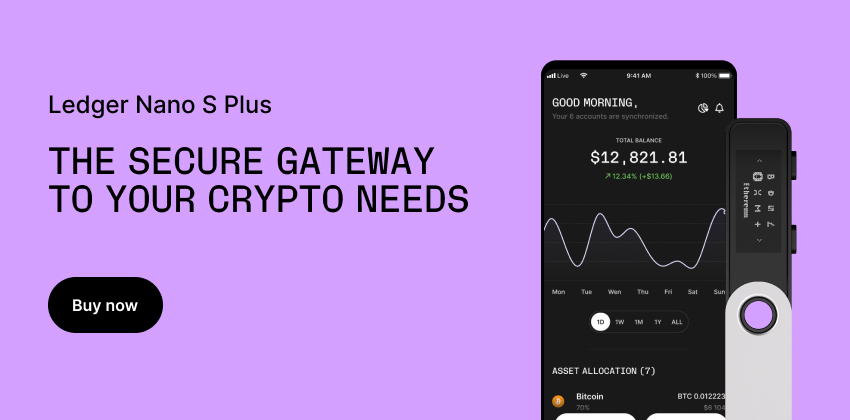
Affiliate link — we may earn a commission if you buy through this link. We only recommend reputable options.
Practical tips before you buy
- Decide your time horizon. Bitcoin makes more sense as a multi-year savings asset than a quick trade.
- Learn self-custody basics. Write down your recovery phrase, store it safely, and never share it with anyone.
- Avoid scams. No one legitimate needs your seed phrase. Ever. Anyone asking for it is trying to empty your wallet.
- Size your position. Start small. Add over time only if it fits your overall plan and risk tolerance.
If you want to go deeper into wallets and security after this, you can head over to the Crypto Education Hub, where you’ll find courses and tools that walk through safe setup step by step.
Free Crypto Starter Pack
Get a simple bundle to help you approach Bitcoin and crypto calmly and safely.
- 5 core crypto guides in plain English
- Access to investment calculators to test scenarios
- Free beginner-friendly courses and micro lessons
No spam. Just independent crypto education you can actually understand.
Bringing it together
Gold and Bitcoin are not enemies. One is ancient and physical, the other is young and digital—but both are used by people who want a place to park value outside day-to-day spending money.
Gold offers history and something you can hold in your hand. Bitcoin offers hard-coded scarcity, instant global portability, and the option to hold value without a middleman. For many people, using both makes sense: gold for stability, Bitcoin for long-term upside they’re willing to ride volatility for.
If you’d like to keep exploring, the Bitcoin Guides hub and the broader Crypto Education Hub are good next stops. Take your time, learn the basics, and only move at a pace that feels comfortable for you.
KEEP LEARNING
Free Crypto Courses
Turn “I should really learn this” into calm, structured progress with crypto.
Work through three free courses at your own pace, plus an advanced security toolkit when you’re ready.
Disclaimer: Educational content only, not financial advice. Crypto assets are volatile and risky. Always do your own research and never invest more than you can afford to lose. Some links may be affiliate at no extra cost to you.