
Bitcoin is a much bigger deal than you think — here’s why
Bitcoin has quietly moved from “weird internet money” to a global asset with ETFs, pension exposure, and real constraints on new supply. Here’s what changed and why it matters.

KEEP LEARNING
Free Crypto Courses
Build a foundation before you invest. Learn how Bitcoin, blockchains, and wallets work in plain English.
Get three free beginner-friendly courses plus one advanced security toolkit when you’re ready to go deeper.
If this is one of the first deep-dive pieces you’re reading, you can start from the My Crypto Guide home page and then explore the dedicated Bitcoin Guides hub for step-by-step explainers on how Bitcoin works, how to store it safely, and how to think about it long term.
For a broader view beyond Bitcoin, the Crypto Education Hub pulls together courses, tools, and key guides, and you can always drop into the regularly updated Media Hub whenever you want to keep reading.
In one minute
- Scarcity you can verify: Bitcoin’s supply is hard-capped at 21,000,000. Anyone can check the rules.
- Neutral rails: Open, global settlement 24/7 with no gatekeeper.
- Self-custody optionality: Hold value directly (keys), or use regulated wrappers like ETFs.
- Record-breaking ETFs: U.S. spot Bitcoin ETFs were approved Jan 10, 2024. BlackRock’s IBIT hit $10B AUM on Mar 1, 2024—fastest ever. By early 2025 the category cleared $100B AUM.
- Supply vs demand (recent): Since the Apr 20, 2024 halving, issuance is ~450 BTC/day. Across Jul 18–Aug 15, 2025 U.S. spot ETFs added ~18,900 BTC (~675/day), outpacing ~13,500 BTC newly mined in 30 days.
Why scarcity matters
Bitcoin’s supply is capped at 21,000,000. The rules that enforce this cap are verified by thousands of independent nodes. Scarcity here isn’t marketing — it’s math anyone can check.
A neutral, borderless network
Bitcoin settles value peer-to-peer, worldwide, 24/7. There’s no “manager override.” If your transaction is valid, the network treats you the same as everyone else, whether you’re moving $20 or $20 million.
Real ownership via self-custody
Holding your own keys removes intermediaries and single points of failure. It requires care (backups, hardware wallets), but gives you an ownership model most digital finance doesn’t: you can hold value directly without trusting a bank, broker, or exchange.
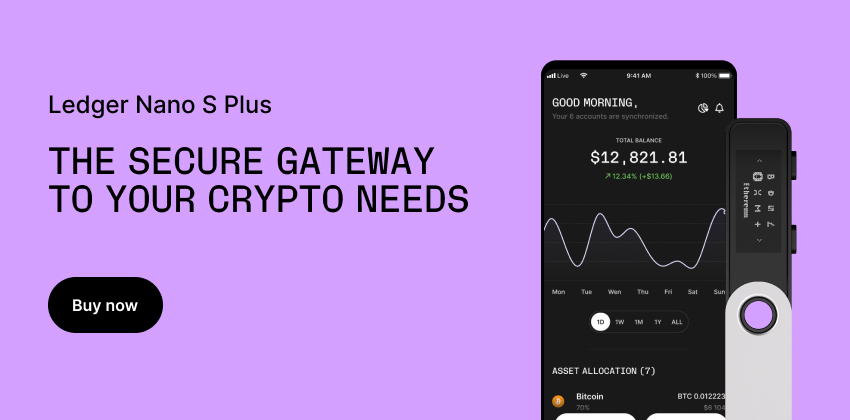
Affiliate link — we may earn a commission if you buy through this link.
What changed in 2024–2025
1) Mainstream market rails arrived. On Jan 10, 2024 the SEC approved 11 spot Bitcoin ETFs; trading began the next day. Within weeks, BlackRock’s IBIT set the fastest-to-$10B AUM record (Mar 1, 2024). By late 2024/early 2025, U.S. spot Bitcoin ETFs collectively topped $100B AUM—the most successful ETF launch cycle on record.
2) It went global. Hong Kong approved spot Bitcoin (and Ether) ETFs to trade from Apr 30, 2024. Australia’s major exchanges listed spot Bitcoin products through 2024–2025. In the U.K., the FCA moved in Aug 2025 to open retail access to crypto ETNs from Oct 8, 2025. Different wrappers, same big idea: regulated, exchange-listed access.
3) Retirement & pensions stepped in—cautiously. U.S. policy shifted in Aug 2025 to let 401(k) plans consider alternatives including digital assets, pending DOL guidance. Public pensions treated ETFs like any asset: some added (e.g., Michigan in Q2 2025), others trimmed or exited (e.g., Wisconsin in May 2025). The pipes now exist; allocations are an ordinary portfolio choice.
4) Big-finance plumbing matured. Coinbase custodies the majority of U.S. crypto ETF assets as of late July 2025. Incumbent banks are expanding services (e.g., ETF custody, stablecoin rails). The direction of travel is familiar providers meeting crypto-specific needs.
Adoption snapshots (recent, not exhaustive)
ETFs
U.S. spot ETFs: category AUM > $100B by early 2025; IBIT fastest to $10B (Mar 1, 2024). As of Aug 15, 2025 U.S. spot ETFs hold roughly ~1.30 million BTC (≈6% of max supply). Internationally, Hong Kong spot ETFs launched Apr 30, 2024. Australia added spot products through 2024–2025. U.K. retail access to Bitcoin ETNs starts Oct 8, 2025.
Pensions & retirement
Policy: Aug 2025 executive action directs agencies to enable alternatives (including digital assets) in 401(k) menus; DOL began rescinding prior restrictive language. Funds behaving like funds: Michigan State Retirement System increased its Bitcoin ETF stake in Q2 2025; Wisconsin’s SWIB exited its IBIT position in May 2025. Participation now looks like normal asset allocation.
Corporate treasuries
Strategy Inc (formerly MicroStrategy) added 155 BTC on Aug 11, 2025 and completed its legal name change the same week. Semler Scientific reported 5,021 BTC as of Jul 31, 2025. Metaplanet (Japan) disclosed holdings around 18,113 BTC after purchases in late July–Aug 12, 2025, becoming one of the largest corporate holders globally.
Nation-state context
El Salvador: Bitcoin legal tender since Sept 7, 2021, still the flagship governmental test bed. Global trend: more jurisdictions are offering exchange-listed access (ETFs/ETNs) rather than jumping straight to legal-tender status — a more scalable path for mainstream adoption.
Supply vs. recent buying (easy math)
Issuance: After the Apr 20, 2024 halving (block 840,000), new supply averages about 450 BTC/day (~13,500 per 30 days).
Recent ETF demand: From Jul 18 → Aug 15, 2025, U.S. spot Bitcoin ETFs increased combined holdings by roughly ~18,900 BTC (~675/day), exceeding coins mined over the same span (~13,500 BTC).

Free Crypto Starter Pack
Get a simple bundle to help you approach Bitcoin and crypto calmly and safely.
- 5 core crypto guides in plain English
- Access to investment calculators to test scenarios
- Free beginner-friendly courses and micro lessons
No spam. Just independent crypto education you can actually understand.
The bottom line
Bitcoin isn’t just an “investment story.” It’s a verifiable scarcity system running on a neutral, open network—and since 2024–2025 it now lives on familiar rails (ETFs, mainstream custodians, retirement menus). That combo explains why adoption headlines now read like normal finance instead of fringe tech.
If you’re new, get the logic first, then decide your path: a small, long-term allocation via a regulated wrapper, or self-custody once you’re comfortable with security. Either way, make your moves deliberately and on your own timeframe.
Next steps that cover most people: read a simple primer, explore our education hub, and start small while you learn. If you’re in Australia and want a simple on-ramp, you can buy Bitcoin with CoinSpot (affiliate). Prefer holding your own keys? Set up a reputable hardware wallet and practice with tiny amounts first.
New to this? Start here: What is Bitcoin? (Beginner’s Guide)
KEEP LEARNING
Free Crypto Courses
Turn “I should really learn this” into calm, structured progress with crypto.
Work through three free courses at your own pace, plus an advanced security toolkit when you’re ready.
Disclaimer: Education only, not financial advice. Cryptocurrency involves risk, including possible loss of principal.