
What Are Altcoins? A Simple Beginner’s Guide
Crypto Setup Services
New to crypto or feeling unsure? We help you set up exchanges, wallets, and security the right way — step by step, without overwhelm.
If you’ve learned the basics of Bitcoin and then looked at a crypto app, the next question usually hits fast: “What are all these other coins?” That giant “everything else” category is what people mean by altcoins. Some are legitimate projects solving real problems. Others are speculative experiments — and plenty are pure hype.
This guide explains what altcoins are in plain English, how they differ from Bitcoin, the main types you’ll see, and how beginners can approach them without getting wrecked. If you’re still new to the basics of Bitcoin itself, you can read our simple explainer click here.
What Are Altcoins?
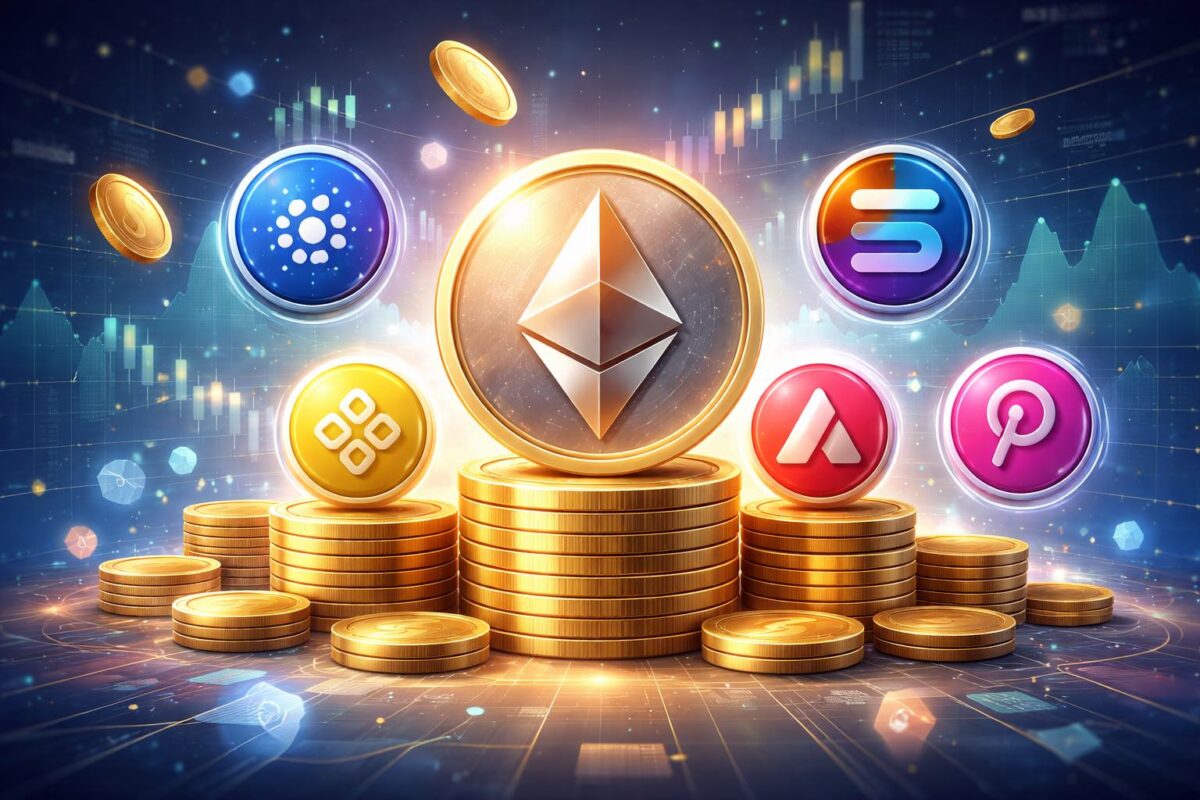
Altcoins is short for alternative coins. In simple terms, an altcoin is any cryptocurrency that is not Bitcoin. That includes well-known projects like Ethereum, Solana, and Chainlink, as well as stablecoins, meme coins, gaming tokens, and a long tail of smaller projects.
Here’s the important bit: “altcoin” doesn’t describe quality. It’s just a category name. Some altcoins are serious infrastructure projects. Others are high-risk bets. And some exist mostly to ride a trend for a few months and disappear.
Altcoins vs Bitcoin (Why They Feel So Different)
Beginners often assume all crypto works the same way. It doesn’t. Bitcoin is built to be simple, resilient, and extremely difficult to change. Most altcoins are built to move faster — which can be useful, but it can also increase risk.
A practical way to think about it: Bitcoin is focused on being sound digital money. Many altcoins are trying to be platforms, applications, or digital economies. That means altcoins often depend on ongoing development, marketing, partnerships, or user adoption to succeed.
This is also why altcoins can have bigger booms and bigger crashes. When sentiment turns, smaller projects can fall hard — sometimes permanently.
Crypto Security Tip: If you’re going to hold altcoins longer than a quick trade, plan your storage first. Leaving everything on an exchange is convenient — but it’s not the same as owning it safely.
Coin vs Token (A Quick Clarity That Saves Confusion)
You’ll hear two words used interchangeably: coin and token. In everyday conversation, people say “coin” for everything — but there’s a useful distinction.
A coin typically has its own blockchain (for example, Ethereum’s network has its native asset, ETH). A token usually runs on someone else’s blockchain — it’s like an app built on top of a platform. Tokens can still be valuable, but they often inherit risks from the platform they depend on.
Plain-English takeaway: coins are usually the “base layer,” and tokens are often “built on top.”
Why Do Altcoins Exist?
Altcoins exist because developers wanted to build features Bitcoin doesn’t prioritise. Bitcoin intentionally avoids complexity. Many altcoins go the other way: they add programmability, new transaction designs, or different economic models.
This is where you’ll hear terms like programmable agreements (called smart contracts) and decentralised applications (called dApps). If you want the clean beginner version of how blockchains work behind the scenes, you can explore our Blockchain Guides pillar click here.
Some altcoins also exist simply because markets love variety. In crypto, narratives drive attention — and attention drives money. That’s why entire “seasons” happen: DeFi season, NFT season, meme season, AI token season… and so on.

Common Types of Altcoins (The Ones Beginners Actually See)
There are thousands of altcoins, but most can be grouped into a few types. You don’t need to memorise them — just use them as mental labels to understand what a project is trying to do.
Platform coins run blockchains that other apps and tokens build on. Think of these like operating systems for crypto. Their value often depends on adoption: developers building, users transacting, and activity staying strong.
Stablecoins aim to track a stable value (often the US dollar). They’re commonly used for trading and transfers, but they come with their own risks, depending on how they’re backed. If you’re learning stablecoins next, you can read our Stablecoins micro-lesson click here.
Utility tokens are “use tokens” inside a product — they might pay for fees, access features, or reward activity. The key beginner question is always: “Would anyone use this product if the token didn’t exist?”
DeFi tokens connect to decentralised finance tools like borrowing, lending, or trading. These can be powerful — and also risky — because smart-contract bugs, hacks, and incentives can break systems fast.
Meme coins are culture-driven. Some become huge in the short term because they’re fun and viral. But long-term survival is rare. Treat them like speculation, not “investments,” unless you genuinely understand what you’re doing.
Free Crypto Starter Pack
New to crypto? Get simple guides, safety tips, and beginner lessons delivered straight to your inbox.
Short emails. No hype. Just practical steps.
Risks Beginners Underestimate With Altcoins
Most people focus on price risk — “it can drop 30% in a day.” That’s real. But the bigger beginner risks are usually structural.
First, many altcoins are centralised in practice. A small team might control upgrades, treasury funds, or key infrastructure. If something goes wrong — or the team disappears — the project can stall.
Second, some tokens are built with incentives that look good early but don’t last. You’ll see big yields, big promises, and big charts… until demand fades. When that happens, the same mechanics that pushed price up can amplify the fall.
Third, there’s liquidity risk. Small coins can be hard to sell without slippage, especially during panic. Your screen might say a price, but real buyers may vanish.
Crypto Security Tip: If a token requires you to connect your wallet to random websites, slow down. Approve only what you understand, and never rush because “the presale ends tonight.”
How to Evaluate an Altcoin (Beginner Checklist Without the Hype)
You don’t need to be a developer to spot quality. Start with simple questions that cut through marketing.
What problem does it solve? If the explanation is vague (“revolutionising the future of Web3”), that’s a red flag. Clear projects can explain themselves in a sentence.
Who uses it? Real usage shows up as steady activity over time, not just spikes during hype. If the only “use” is people buying the token, that’s not adoption — it’s speculation.
How is the supply structured? Tokens with massive allocations to insiders, unclear vesting, or confusing supply mechanics can dump hard when lockups end.
What’s the security story? The more complex the system, the more things can break. For beginners, simple is often safer.
Can you explain why you’d hold it? If your reason is “someone on YouTube said it will 10x,” that’s not a plan. It’s hope.
A Safer Beginner Approach to Altcoins
If you’re just getting started, the goal isn’t to “catch the next big thing.” The goal is to build understanding and avoid common traps.
A practical approach is to start with a small watchlist, learn what each project does, and track how it behaves through market volatility. Notice how some coins hold up better than others, and how narratives affect price.
Also, be honest about time horizon. If you can’t emotionally handle big swings, altcoins will test you. Many people do better focusing on learning, security, and slow consistency rather than constant chasing.
If you want a structured learning path, our Bitcoin Guides hub is a clean starting point click here — then you can expand outward into altcoins once the fundamentals feel solid.
Wrap-Up: Altcoins Without the Noise
Altcoins are simply cryptocurrencies other than Bitcoin — but that category includes everything from serious infrastructure projects to short-lived hype tokens.
For beginners, the win is not “picking the next 100x.” It’s understanding what you’re buying, spotting red flags early, and setting up security before you chase anything.
If you’re unsure where to start, focus on fundamentals and safe setup first — then explore altcoins with a clearer head and a calmer plan.
Mini-FAQ: Altcoins
Are altcoins “better” than Bitcoin?
Can altcoins go to zero?
Should beginners buy altcoins?
What’s the difference between a coin and a token?
Free Crypto Courses
Learn crypto step by step, without hype or pressure.
This content is for educational purposes only and does not constitute financial advice. Crypto is risky and prices can be volatile. Only invest what you can afford to lose.